Our philosophy & process
The Kintsugi Method
Kintsugi is the Japanese art of repairing broken pottery with gold. The repair becomes part of the piece's beauty and history. That spirit guides our work: honoring a vintage cabinet's character and giving it a new life through sound.
Perfectly imperfect. Each cabinet retains traces of its past, carefully restored by hand. Its proportions, construction and character guide a modern audio system designed specifically for it.
From restoration and component pairing to listening tests and room tuning, our retro-engineered consoles bring an authentic look together with modern capabilities. One cabinet, considered individually at every step.
01
Sourcing & Assessment
A single cabinet is chosen for its veneer, proportions and internal volume. Everything is measured and photographed before a screw is turned, so the original character is known and preserved.
02
Full Teardown
Chassis, drivers, wiring and hardware come out. Original labels, schematics and serial plates are catalogued and kept with the build.
03
Cabinet Restoration
The cabinet is hand-stripped and refinished. Inside, it is braced for rigidity, the turntable is isolated from vibration, and the interior is insulated so the new speakers can perform at their best.
04
System Design
Every build is analyzed on its own terms: the cabinet's size, volume and construction guide the first design. Electronics, sources and controls are chosen to bring vintage analog listening and high-resolution streaming together. Then we try the design, listen and refine it. The final system evolves from what works best in the actual cabinet.
05
Speakers & Amplifier Pairing
We audition different speakers and amplifier pairings for each cabinet, comparing their sound before integration. A promising choice on paper can change after listening. Only the pairing we are happy with becomes part of the finished console. This careful, intimate process gives each piece its own character and life.
06
Voicing & Room Tuning
Each system is measured, tuned and set up, then tuned again for the room it will live in. Every room sounds different, so every console comes with the means to calibrate it to your space. The components are chosen to work together for reliability, performance and everyday ease of use.
How we name each console
The name tells you where it sits
Jo, Ha and Kyū take their names from jo-ha-kyū (序破急), the three-part structure of traditional Japanese music, rooted in gagaku court music and carried into Noh theater. The tiers describe our consoles from smallest to largest by cabinet width.
序 Jo
Compact
Compact consoles for smaller rooms and close, personal listening.
破 Ha
Mid-size
Mid-size consoles for living rooms that need depth and warmth.
急 Kyū
Grand
Grand consoles for large rooms and immersive, room-filling sound.
Brand
Kintsugi Sound
Size tier
序 Jo
Compact · 37 in wide
Origin code
PB-17A
Packard Bell RPC-17A
The cabinet's signature
Original cabinet makers and furniture names we consider for restoration. The table explains their origin codes; our current build is the Packard Bell RPC-17A.
Each name joins its size tier, maker code and original model number. Two-word makers use their initials; one-word makers use their first and last letter. The full name identifies each one-of-a-kind piece.
- Drexel
- DL
- Motorola
- MA
- Packard Bell
- PB
- Electrohome
- EE
- Zenith
- ZH
- Grundig
- GG
- Magnavox
- MX
- Telefunken
- TN


序 Jo PB-17A
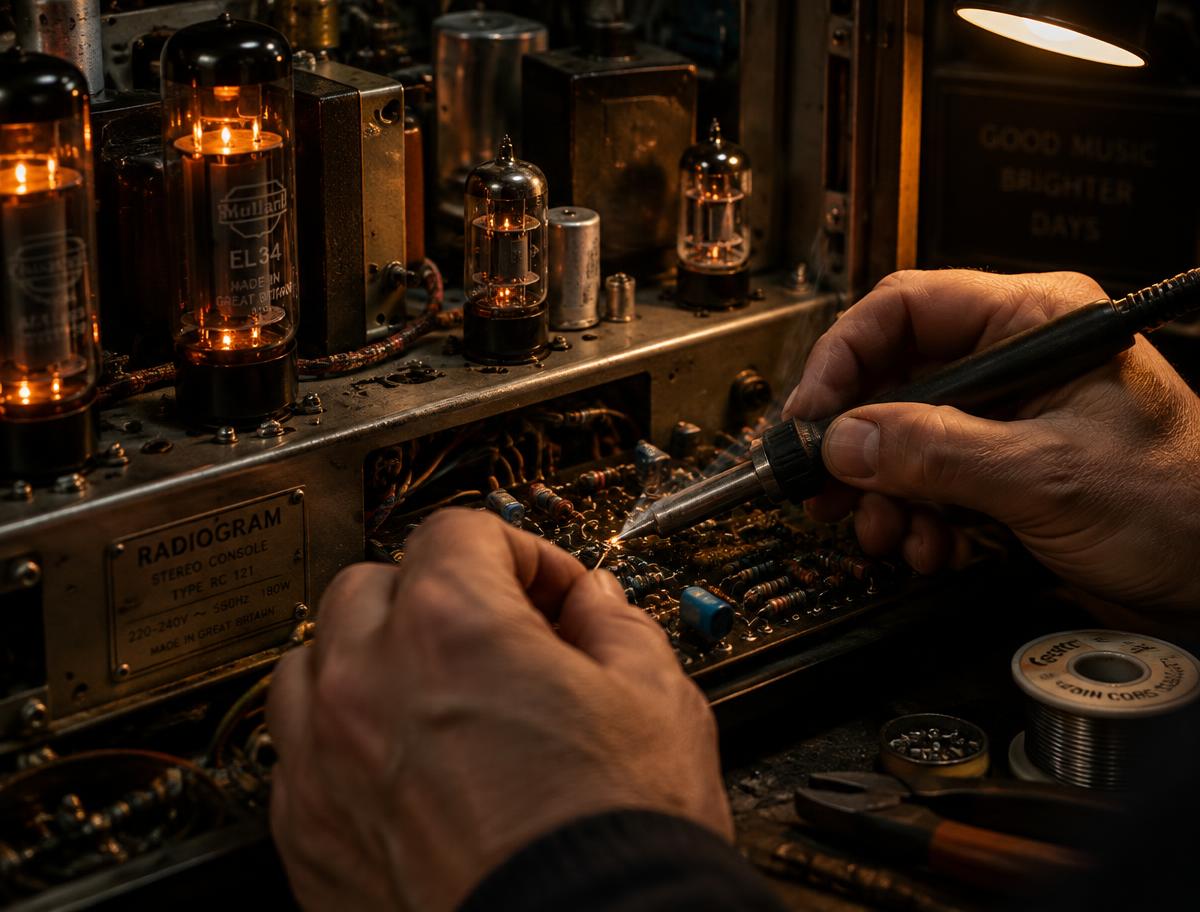
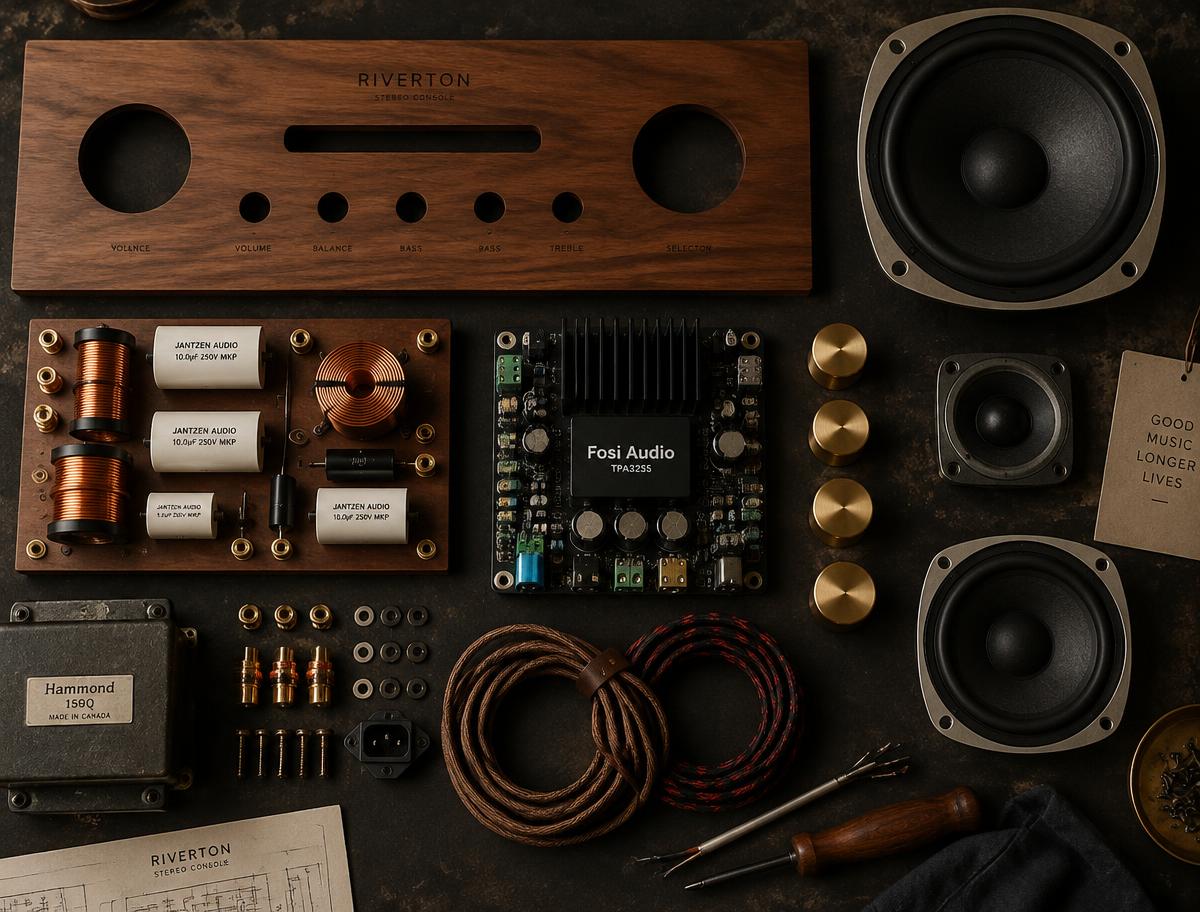
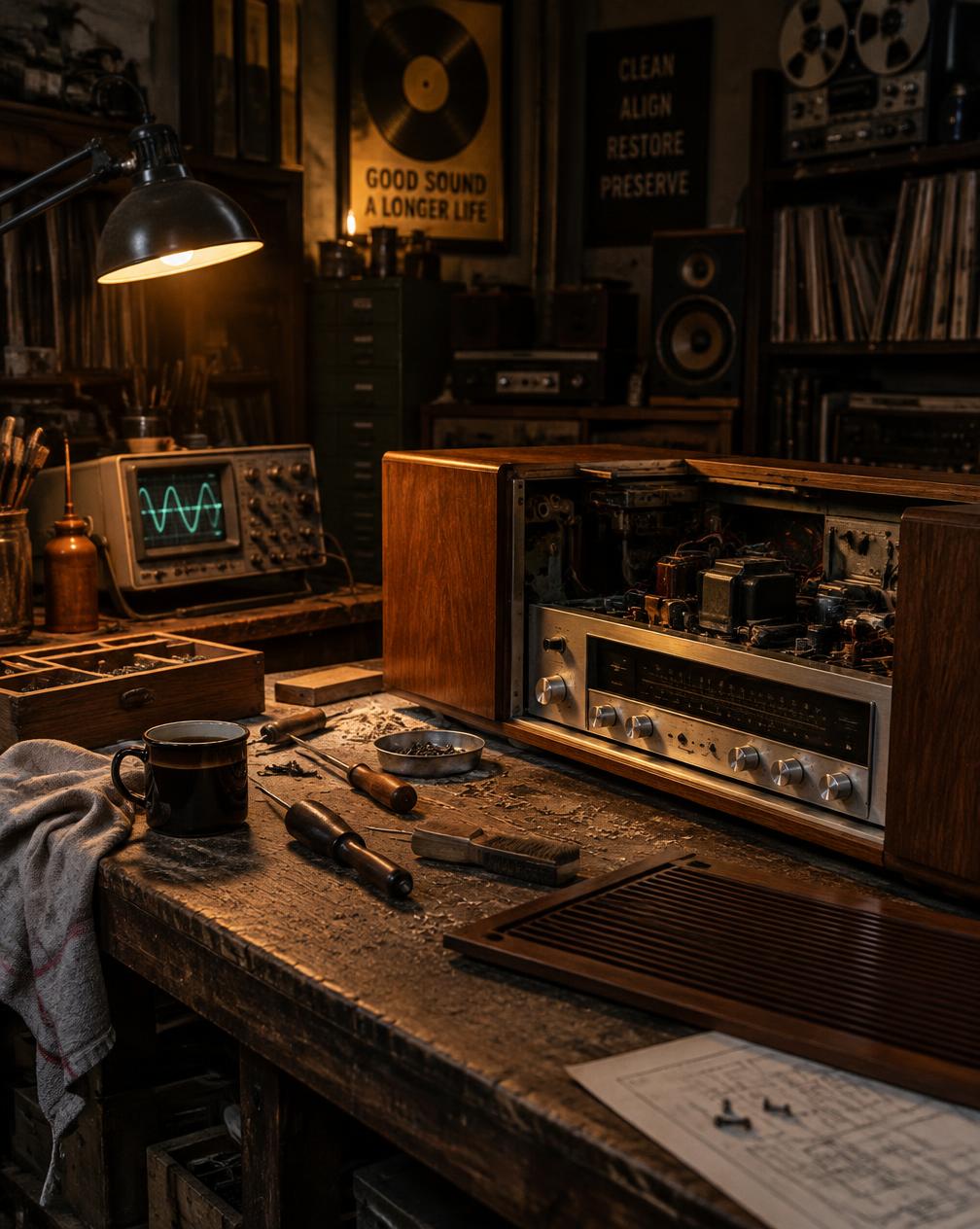
From the bench
The current console
序 Jo PB-17A
See this cabinet brought to life, with its listening features, installed equipment, dimensions and optional upgrades.